
Who are we?
Our Mission
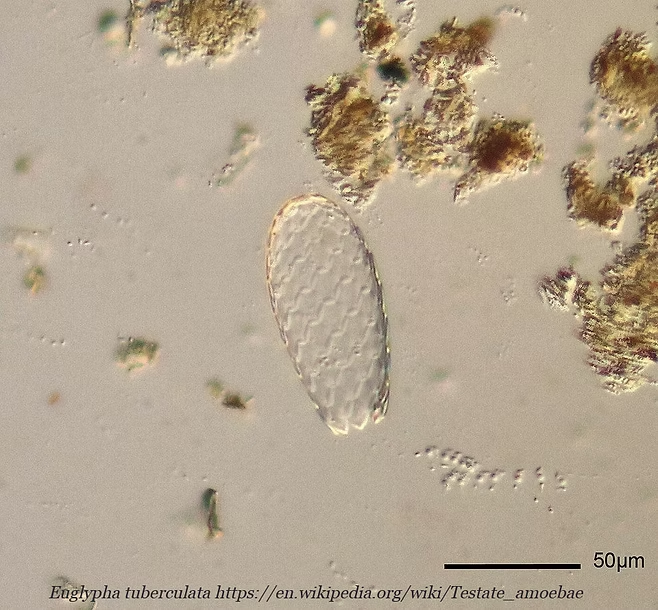
The International Society of Testate Amoeba Research (ISTAR) is a global scientific society dedicated to advancing all aspects of testate amoeba research. Our mission is to promote and stimulate worldwide studies on testate amoebae — their taxonomy, ecology, evolution, biogeography, and environmental applications — for the benefit of the scientific community and the public.
ISTAR maintains a central platform for communication, resources, and collaboration. We provide access to identification keys, protocols, taxonomic literature, and research tools that support both new and experienced researchers. The society also organizes the biannual International Symposium on Testate Amoebae (ISTA), a meeting that gathers scientists from around the world to share new findings and strengthen our scientific network. ISTAR is committed to supporting early-career researchers and scholars with limited financial means by facilitating their participation in these events.
Our Origins
The modern development of ISTAR is closely linked to the revival of the International Symposium on Testate Amoebae (ISTA). After several decades without a dedicated meeting, ISTA was relaunched in 2006 with ISTA-4 in Antwerp, Belgium. The symposium was organised and hosted by Louis Beyens, in collaboration with Pieter Ledeganck and Sofie Vincke, marking a renewed momentum for the international testate amoeba research community. This meeting re-established ISTA as a central forum for discussing taxonomy, morphology, phylogeny, biogeography, ecology, and palaeoecology of testate amoebae.
As ISTA continued to grow in the following years, the idea of formalising the community into a scientific society emerged progressively. Discussions about establishing an international organisation took place across several ISTA meetings. These conversations reflected a shared and growing desire for a stable framework to support collaboration, ensure continuity, and strengthen the involvement of young researchers within the community.
This vision was formally realised at ISTA-11, hosted at Brock University in St. Catharines, Canada, where participants voted to establish the International Society of Testate Amoebas Research (ISTAR) and elected its first committee. This milestone laid the institutional foundation that now supports ISTAR’s mission to promote scientific exchange, resource sharing, and the advancement of testate amoeba research worldwide.
Our Vision
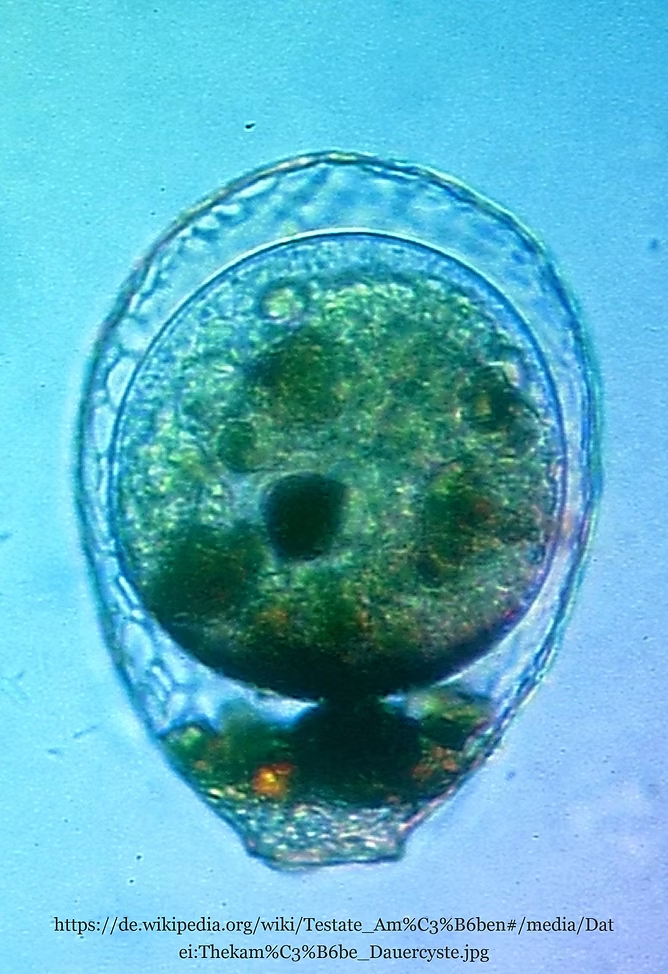
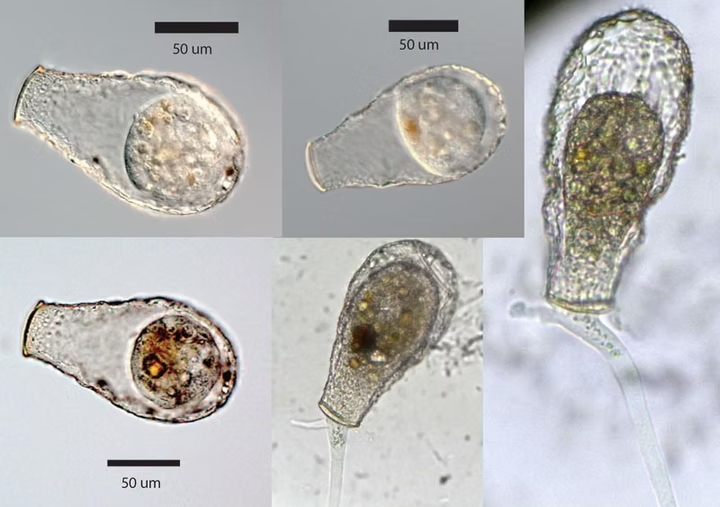
ISTAR strives to unite researchers working on testate amoebae across disciplines, generations, and geographical regions. We envision a dynamic and inclusive scientific community where knowledge, methods, and data can circulate freely, enabling robust comparisons and collaborative projects at global scales. By fostering collaboration, sharing research resources, and supporting scientific exchange, ISTAR works to strengthen the visibility and impact of testate amoeba research within the broader fields of microbiology, ecology, evolutionary biology, and environmental science.
We are committed to advancing both fundamental and applied research on these essential microeukaryotes. Testate amoebae play key roles in soil and freshwater ecosystems, and they serve as sensitive indicators of biodiversity patterns, ecosystem functioning, and environmental change. ISTAR’s long-term vision is to support research that improves our understanding of these organisms, promotes methodological innovation, and highlights their ecological importance in a rapidly changing world.
Through coordinated international efforts, ISTAR seeks to provide a stable framework that allows current and future generations of scientists to build upon one another’s work, develop shared standards, and collectively shape the future of testate amoeba research.